Spiritual Contracts
Across human history, various cultures and esoteric traditions have defined specific ways humans supposedly strike deals with the spiritual world. Here is a breakdown of the most common types of spiritual “contracts.”
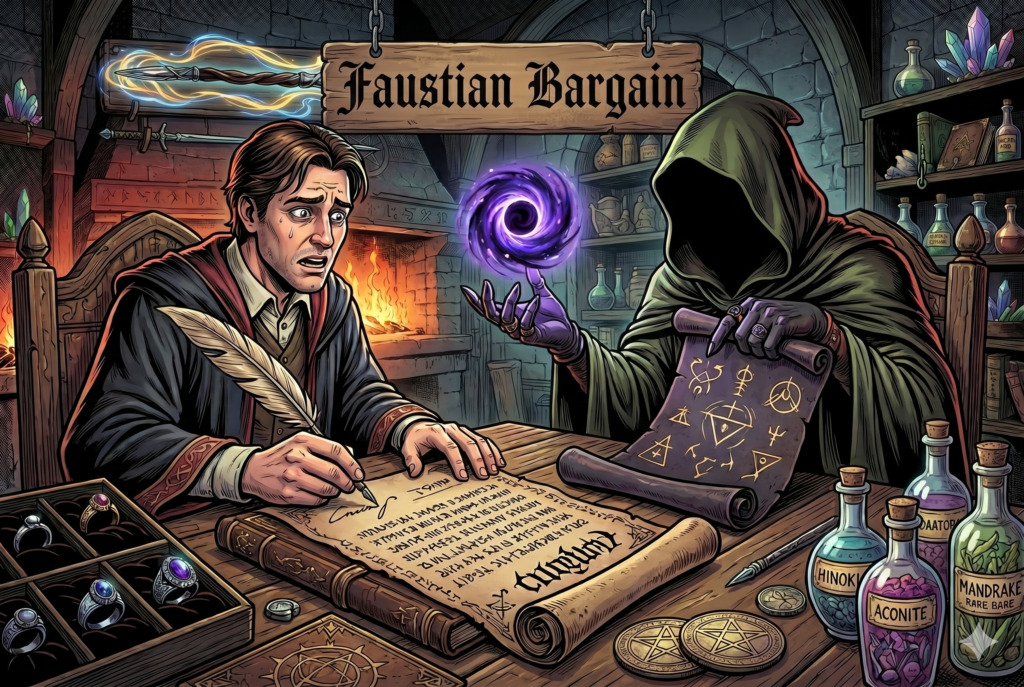
### 1. The Faustian Bargain (Demonic Pacts)
This is the classic “deal with the devil” found in Western folklore, literature, and demonology. A person formally agrees to trade something of ultimate spiritual value—usually their soul—in exchange for earthly desires like wealth, forbidden knowledge, immense power, or youth.
* The Mechanism: In historical witch trials and literary myths (like the legend of Faust), these pacts were often depicted as literal written contracts signed in the practitioner’s own blood to signify a binding life force.
* The Dynamic: It is transactional but predatory. In folklore, demonic entities are tricksters; the contract is almost always designed to backfire, giving the mortal exactly what they asked for in a way that ultimately ruins them.
### 2. The Divine Covenant (Theological)
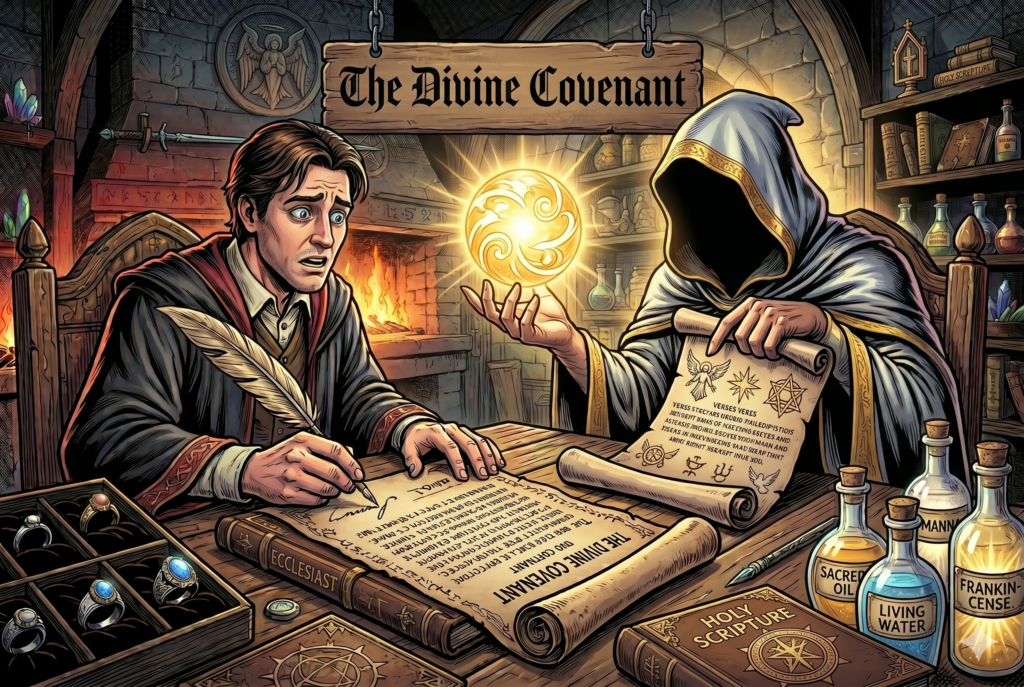
A covenant is a formal, binding agreement between a deity and humanity (or a specific group of people). This is a foundational concept in the Abrahamic religions (Judaism, Christianity, and Islam).
* The Mechanism: It is a treaty of mutual obligation. The deity promises protection, favor, or salvation, and in return, the people promise exclusive worship, obedience to divine law, and specific moral conduct.
* The Dynamic: Unlike a modern contract between equals, a covenant is dictated by the higher power. The terms are non-negotiable, and breaking them historically resulted in divine punishment or the withdrawal of protection.
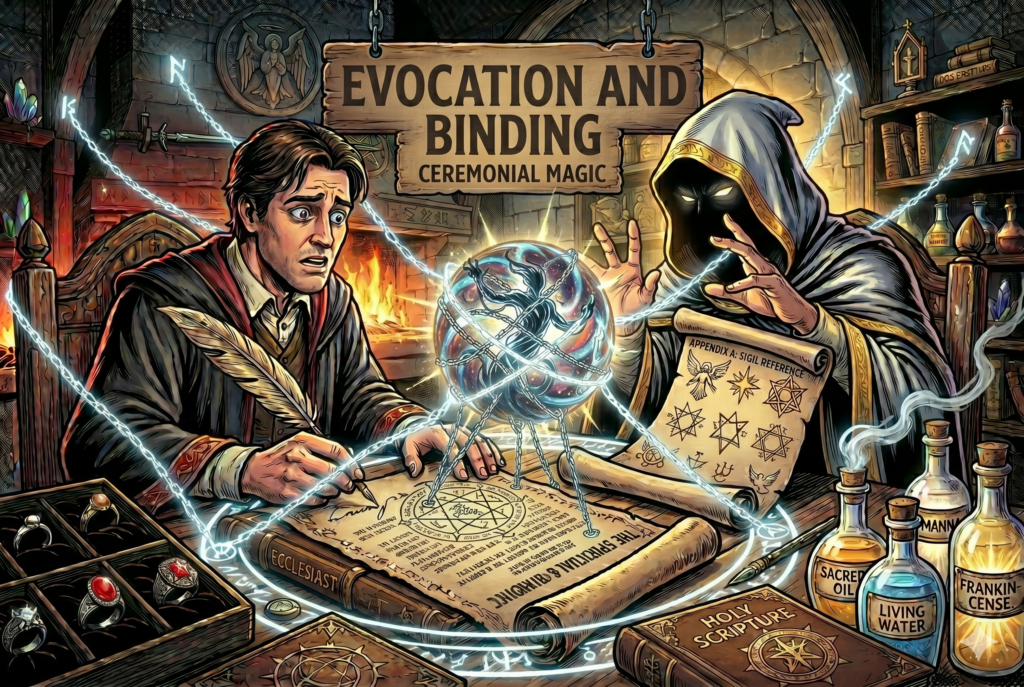
### 3. Evocation and Binding (Ceremonial Magic)
In Renaissance occultism and medieval *grimoires* (books of magic), practitioners didn’t usually “bargain” with spirits; they attempted to command them through a highly structured legalistic framework of magic.
* The Mechanism: Texts like the *Key of Solomon* outline rituals using sacred geometry, specific planetary hours, and the “names of God.” The magician draws a protective circle and uses a specific seal or sigil (like the one above) to summon an entity.
* The Dynamic: The contract here is based on spiritual hierarchy. The magician claims divine authority to compel or “bind” the spirit to perform a task or share knowledge, rather than making a mutual trade.
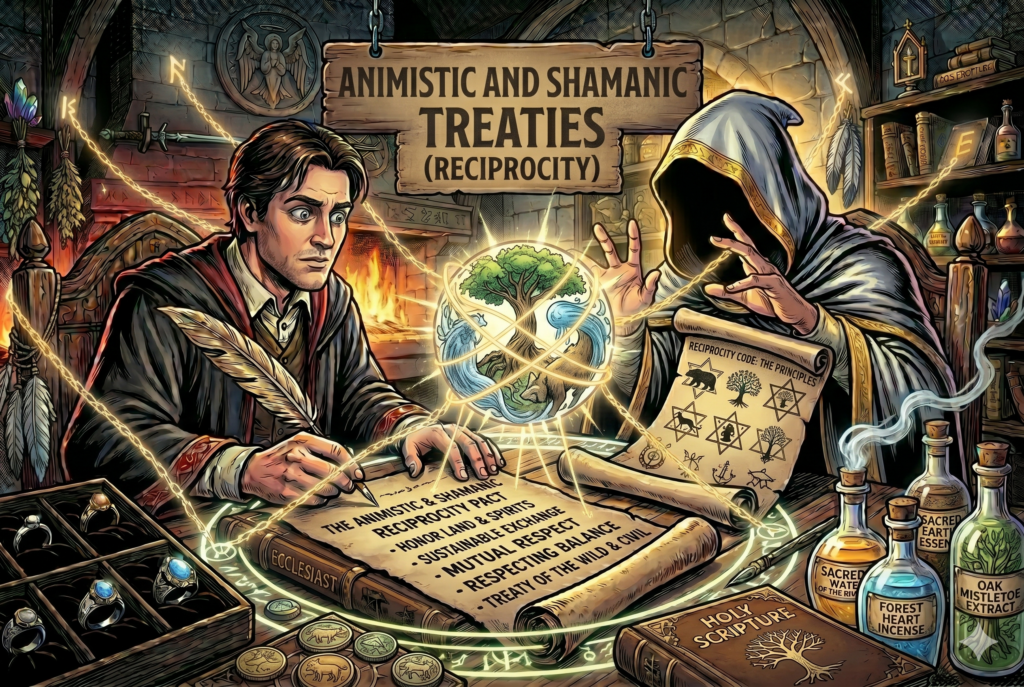
### 4. Animistic and Shamanic Treaties (Reciprocity)
In many indigenous, shamanic, and animistic traditions, the world is alive with nature spirits, ancestors, and local deities. The relationship with these entities is based on continuous, mutual survival rather than a one-time signed document.
* The Mechanism: The “contract” is maintained through regular offerings (food, drink, incense, or song) and the strict observance of taboos (e.g., not hunting in a sacred grove).
* The Dynamic: It is highly symbiotic. You offer the spirits respect and sustenance, and in return, they ensure a good harvest, provide protection from illness, or grant safe passage through their territory. If you stop the offerings, the contract is broken, and the spirits withdraw their favor or become hostile.
### 5. Patronage and Dedication (Paganism & Witchcraft)
Common in both ancient polytheistic religions (like Hellenism) and modern practices (like Wicca), this is a voluntary, devotional contract between a practitioner and a specific “Patron” deity.
* The Mechanism: The practitioner takes an oath or performs a dedication ritual, essentially offering their lifelong service, worship, and altar space to that specific god or goddess.
* The Dynamic: It works like an apprenticeship or a mentorship.
The deity guides the practitioner’s spiritual growth and offers specialized protection, while the practitioner acts as an earthly representative of that deity’s domain.
> The Enforcement: The core difference between a legal contract and a spiritual one is the consequence of a breach. You can’t take a spirit to civil court. In folklore and religion, breaking a spiritual contract results in a loss of spiritual protection, bad luck, supernatural retaliation, or damage to one’s soul.